
Wednesday, May 6
Day 1
WORKSHOP: NFPA 70E: Common Misconceptions in the Field
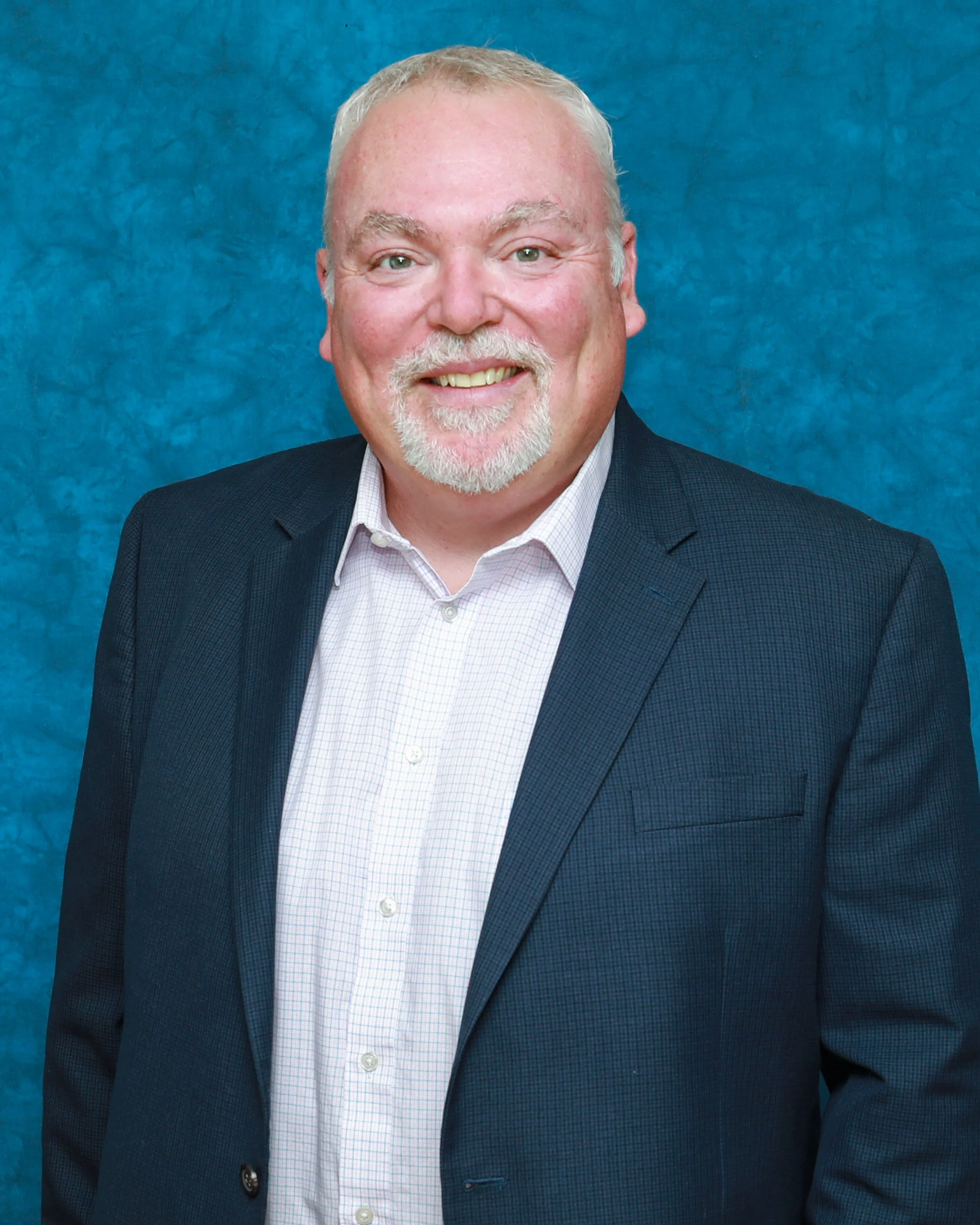
Presented by David Hicks, Corporate Safety Director, Quebe Holdings, Inc.
Roughly 98% of all fatal electrical incidents are from electrical shock. This is due to commonly misapplying the NFPA 70E standard or the workers not truly understanding what the standard is really asking of them. In this workshop we will explore these common misconceptions, and how we can better explain to the workers on what they need to do to be safe when working near or on electrical equipment, whether they are in a facility or on a construction site.
WORKSHOP: Introduction to PSM: Where did PSM come from?
Presented by Aaran Green
Process Safety Management (PSM) came about in 1992 when OSHA issued Process Safety
Management of Highly Hazardous Chemicals standard (29 CFR 1910.119). This standard
contains requirements for the management of hazards associated with processes using highly hazardous chemicals.
The purpose of this workshop is to go back in time and understand where PSM came from; specifically focused on historical incidents over time which shaped PSM. For example, Flixborough U.K. explosion (1974); Seveso, Italy (1976); Bhopal India (1984); Mexico City (1984); and Phillips Pasadena. We breakdown and summarize each incident, contributing factors, and lessons learned.
WORKSHOP: Mission: What's Possible? Turning Detection, Decision, and Defense into Action
Presented by Tim Walsh, CSP, Founder-Principal Consultant, Bolster Safety Craft
This presentation tackles the most common and severe industrial hazards: struck-by and caught-in incidents, amputation prevention through safeguarding power transmission apparatus and points of operation, and identifying hazardous movements of end effectors, piece-parts, and equipment in automated processes. We will cover risk measurement, implementing effective primary and complementary controls, and validating those controls for maximum effectiveness. The session introduces a proactive blueprint, establishing timeliness and an order of operations for hazard detection-from conceptual design through initial implementation, pre-production validation, and ongoing intervals. We will review risk management processes, including assessment formats and structured team involvement, define key focus areas such as equipment inventory, hazard identification and risk measurement, and outline strategies for mitigation. Finally, we will examine Safety Management Systems (SMS) checks and balances to ensure validation and repeatability, maintaining long-term safety integrity.
WORKSHOP: Journey Toward Safety Excellence: The Roadmap To Success
Presented by Bill Linneweh, Director, EHSS, Hendrickson Int’l and Chris Williams, Executive Director-VPPPA
Sending employees home in the same condition than which they arrived for their shift - its what every business strives for. But how do we actually achieve this objective?.
Building on the principles of OSHA's Voluntary Protection Program, the Journey Toward Safety Excellence identifies the key components on the roadmap to building and sustaining your site's safety and health management system. Using the core elements of VPP along with lessons learned from sites and companies who have achieved VPP status, this presentation will arm attendees with a better understanding of the pathway toward building a culture where employee involvement and management commitment drive continuous improvement across the board.
Workshop: ANSI Fall Protection Standards: What You Need To Know
Presented by Thomas Kramer, PE, CSP, LBJ Engineering
To keep up with evolving technologies and related equipment in the fall protection industry, the ANSI/ASSP Z359 standards - or Fall Protection Code - are continuously advancing to provide organizations with best practices. During this session, attendees will learn how recent and upcoming changes to Z359 standards will impact an organizations fall protection program. The presenter - the Past Chair of the ANSI/ASSP Z359 Committee - will provide an overview of the standards, key changes in the updated documents, and recommended ways to implement this new information. Safety professionals can use this overview to determine the best strategy for applying the new information to reduce risk for workers at heights.
WORKSHOP: LOCKOUT/TAGOUT Training Board: A Hands-On-Approach In A Hands Off World
Presented by Adam Chapman, Morgan Ebner, and Ken Edwards, Epsilyte
Refresh on human factors relative to an effective Lock-out/tag-out program. Learn how you can build and utilize a LOTO training board and leverage it as a hands-on training tool for effective energy isolation. Attendees will execute various lock-out, tag-out, try work orders to illustrate the potential pitfalls and mitigations for a successful, injury-free LOTO program.
BREAK - EXHIBIT HALL
Come explore the Exhibit Hall. What a great way to have face-to-face communication with the vendors and learn about new and existing safety products.
Drink Station: Pepsi Products, Tea, Lemonade, Sparkling Flavored Water
Want to win an attendance prize? Bring your PURPLE ticket for a chance to win a gift card. Drawing at 2:15 PM. Must be present to win.
WORKSHOP: Why VPP? Here’s why!
Presented by Brad Baptiste, Senior Safety VPP Manager, Cardinal CG
After 13 years in OSHA enforcement, 21 years as an OSHA Regional VPP Manager, and now a year as a corporate VPP manager for Cardinal CG, I will share with you my many "Why's" for adopting VPP.
WORKSHOP: Translating Culture: How to Bring Your Safety Culture to New Locations
Presented by Rob Hunter, Senior Safety Education and Programs Manager and Ken Sandor, Senior Regional Safety Manager with Clayco
Developing a strong focus on safety is a big enough task for one location, but how do you spread that culture across to multiple locations in different regions, states, or even countries with the various challenges they bring - language, culture, and experience. We will discuss Clayco's approach to bringing our culture to projects across the country and how we've addressed these challenges.
WORKSHOP: Building Strong Foundations: Physcological Safety & Mental Health in Construction
Presented by Dan Lester, VP of Field Culture & Inclusion
In a stand-alone 50-minute session, participants will hear a high-level overview of psychological safety and mental health in construction. Drawing on Clayco/Concrete Strategies' research backed mental health studies (2024-2026) alongside broader industry-backed data, participants will hear key trends impacting workforce well-being. Attendees will learn to recognize early indicators of team stress, apply best practices for fostering trust and communication on the job sites, and take actionable steps to improve psychological safety in the field.
WORKSHOP: Instinctive Safety Wins - Everytime!
Presented by Chris Culpepper, Corporate Safety Trainer, Cintas
What if safety training didn’t start with rules - but with emotion? This dynamic, high-energy workshop shows leaders how engagement, trust, and instinctive safety behaviors are built through positive human connection. In less than 15 minutes, participants experience ten powerful emotions - joy, curiosity, pride, creativity, and genuine care - through a surprising interactive exercise that instantly captures attention and eliminates distractions. From there, the session makes a clear and practical connection: people don't work safely because they are told to - they work safely because they feel cared for. Participants will explore how love (the non-romantic kind), engagement, and habit-building drive injury reduction and stronger safety culture. Using the memorable "window and mirror" mindset, leaders learn how to celebrate success, take accountability, and reinforce safety until it becomes instinctive. This isn’t compliance training. It’s a mindset shift that helps people go home better than they came in.
WORKSHOP: SGE's! Here is more information for you!
Presented by Melissa Linton, Regional VPP Manager, OSHA and Tina Kennedy, Region V Co-Chair, Epsilyte
This workshop is to inform new SGE's and current SGE's of any changes to the report/form, answer questions, help understand the audit process, along with the mentoring and pre on sites. Bring any and all questions you may have, and we will help find answer!
WORKSHOP: PHA and PSI for Operations
This presentation tackles the most common and severe industrial hazards: struck-by and caught-in incidents, amputation prevention through safeguarding power transmission apparatus and points of operation, and identifying hazardous movements of end effectors, piece-parts, and equipment in automated processes. We will cover risk measurement, implement effective primary and complementary controls, and validating those controls for maximum effectiveness. The session introduces a proactive blueprint, establishing timeliness and an order of operations for hazard detection-from conceptual design through initial implementation, pre-production validation, and ongoing intervals. We will review risk management processes, including assessment formats and structured team involvement, define key focus areas such as equipment inventory, hazard identification and risk measurement, and outline strategies for mitigation. Finally, we will examine Safety Management Systems (SMS) checks and balances to ensure validation and repeatability, maintaining long-term safety integrity.
BREAK - EXHIBIT HALL
Come explore the Exhibit Hall. What a great way to have face-to-face communication with the vendors and learn about new and existing safety products.
Drink Station: Pepsi Products, Tea, Lemonade, Sparkling Flavored Water
Want to win an attendance prize? Bring your PURPLE ticket for a chance to win a gift card. Drawing at 3:35 PM. Must be present to win.
WORKSHOP: PSM Applicability
Presented by Aaran Green
Applicability of PSM is sometimes a tricky subject. Once the site determines that a highly hazardous chemical (HHC) as defined in the standard is present and exceeds the threshold quantity, the site needs to develop and implement a PSM program covering the highly
hazardous chemicals, including interconnection with utilities that support the process. There are also exceptions to this rule, such as atmospheric tanks, storage of HHC, non-covered chemicals. However, there are many situations where these exceptions can lead to catastrophic results. For instance, one can remember the ammonium nitrate explosion that occurred in West, Texas back (2013), ITC Terminal fire in Deer Park, Texas (2019), and propylene explosion at Watson Grinding in Houston (2020).
The purpose of this workshop is to present what to look for when deciding if a site is PSM covered or not and how the extent of PSM boundaries should be defined.
WORKSHOP: Building a Solid VPP - Level Performance Management and Appraisal System
Presented by Brad Baptiste, Senior Safety VPP Manager, Cardinal CG
Serving as an OSHA Regional VPP Manager for over two decades afforded me many opportunities to observe and evaluate VPP-Level goal setting and performance management programs. This presentation will describe how to establish an effective goal setting, performance management, and performance appraisal system at your worksite in support of your efforts to implement VPP.
WORKSHOP: You Don’t Know What You Don’t Know- Avoiding Surprises when Determining Worker Exposures
Presented by Eric Pylkas, CIH, CSP, CHMM, Industrial Hygienist, Insight IH Consulting, Inc
Industrial workplaces in all sectors are familiar with industrial hygiene sampling. Done by a consultant or in-house, it proceeds in a similar manner: a scope is created, sampling equipment/media is secured, and monitoring occurs over one or more shifts. The results are received from the laboratory and are below the exposure limits. Is all well? Sometimes the reason the results were good is that the wrong chemicals were assessed. This is not the fault of those in charge of monitoring...SDSs can omit critical information, unknown reaction products can be created, or processes unknowingly changed. In my 20+ years of industrial hygiene sampling I've encountered many surprises that initially seemed absurd, but in hindsight made perfect sense. My hope is to present case studies that show such results so that safety professionals can apply the knowledge to their own companies.
WORKSHOP: Concrete Won't Crack - But Your Team Might! Let's Fix That
Presented by Dan Lester, VP of Field Culture & Inclusion
In this focused 50 - minute workshop, participants will dive into the critical topics of psychological safety and mental health in construction. The session begins with a concise overview of the mental health a relevant and actionable priority on site. Attendees will learn how to lead effective mental health toolbox talks and gain practical techniques for conducting meaningful one-on-one conversations that foster psychological safety. Through interactive discussion and real-world examples, participants will leave with tangible tools they can immediately apply to create healthier, more open work environments.
WORKSHOP: Work Safe Now: Play More Later!
Presented by Nancy Mugavero, Retired OSHA Region V VPP Manager
I will discuss how applying VPP principles at work now keep employees safe and healthy so they can enjoy an active and fun retirement. This presentation will give the "WHY" to working safe.
WORKSHOP: LOCKOUT/TAGOUT Training Board: A Hands-On-Approach In A Hands Off World (Copy)
Presented by Adam Chapman, Morgan Ebner, and Ken Edwards, Epsilyte
Refresh on human factors relative to an effective Lock-out/tag-out program. Learn how you can build and utilize a LOTO training board and leverage it as a hands-on training tool for effective energy isolation. Attendees will execute various lock-out, tag-out, try work orders to illustrate the potential pitfalls and mitigations for a successful, injury-free LOTO program.